

By Mohammed Baba Yahaya
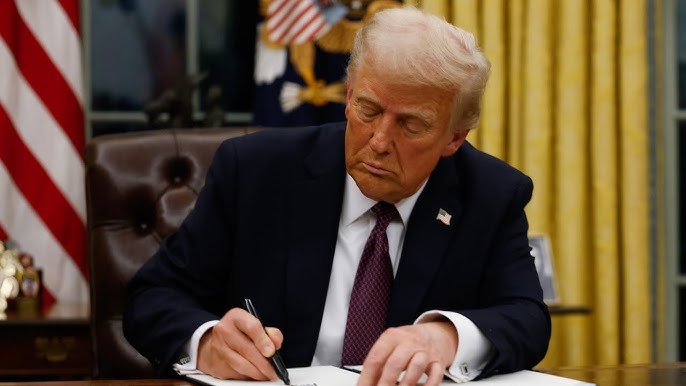
In the wake of a sweeping presidential memorandum signed by U.S. President Donald Trump on January 7, ordering withdrawal from 66 international and United Nations organizations, African nations are bracing for profound disruption. Analysts warn the move, framed by the White House as a recalibration of national interests, threatens to unravel decades of development progress, weaken public health systems, and accelerate a scramble for influence on the continent, leaving pivotal states like Nigeria navigating a sudden crisis.
The directive, which defines withdrawal as ceasing participation and funding “to the extent permitted by U.S. law,” targets bodies central to climate action, global health, development finance, and peacebuilding. For Africa, a continent heavily reliant on multilateral cooperation, the consequences are not abstract—they are immediate and severe.
The first and most direct blows land on climate and energy initiatives. The U.S. exit from the UN Framework Convention on Climate Change and the withdrawal of support for Just Energy Transition Partnerships (JETPs) has already triggered project cancellations.
“South Africa’s flagship JETP alone has seen a $1 billion commercial investment pledge vanish alongside critical grants,” the analysis notes, jeopardizing plans to retire coal plants and build renewable infrastructure. This U.S. retreat from climate finance leadership leaves a gaping hole in funding for adaptation projects across the continent.
In the health sector, the defunding of the World Health Organization (WHO) poses a dire threat. The U.S. contributed 12-15% of the WHO’s core budget, a lifeline for programs fighting HIV/AIDS, malaria, tuberculosis, and bolstering maternal health.
“The loss of subsidized services and medicines will shift costs directly onto individuals and households,” undermining hard-won gains toward universal health coverage, experts caution. Key advocacy platforms like the UN’s Economic Commission for Africa also lose a major partner, diminishing the continent’s voice on critical economic policy.
For Nigeria, Africa’s most populous nation and its largest economy, the impacts are compounded into what analystscalled a “perfect storm.” The nation is the 7th largest recipient of U.S. aid globally, receiving over $1 billion in 2023.
“A sudden halt disrupts everything from healthcare in the conflict-ridden northeast to basic education programs, forcing impossible budgetary choices,” the reporting indicates. The security partnership, long a cornerstone of relations, is also entering fraught territory. A shift toward a purely “transactional” U.S. approach, prioritizing narrow counter-terrorism strikes over holistic stability support, risks exacerbating local conflicts rather than resolving them.
Perhaps most critically, Nigeria’s fragile march toward universal health coverage faces a severe test. Programs like the U.S. President’s Emergency Plan for AIDS Relief (PEPFAR), which have saved millions of lives, are now in question. “We’ve seen in other nations how the cost of basic commodities like condoms can spike overnight when this support falters. The household financial burden will increase dramatically,” a public health expert observed.
Beyond the programmatic cuts, the strategic landscape is shifting. The U.S. policy has created a vacuum that other global powers are swiftly moving to fill.
“China is poised to expand its Belt and Road Initiative infrastructure footprint, while Russia deepens military and economic ties,” the analysis finds. In response, the U.S. now frames its own engagement in starkly competitive terms, seeking “transactional” deals on critical minerals and security to counter rivals.
Facing this great-power arbitrariness, African states are discovering a new imperative for unity. There is a growing, forceful push for a coordinated African geopolitical strategy to defend multilateral rules and ensure the continent’s vast resources benefit its own development first.
In this new, more fragmented world order, the prescription for Africa and Nigeria is clear but challenging. For the continent, accelerating the African Continental Free Trade Area (AfCFTA) is no longer just an economic project but a strategic necessity to reduce external dependency.
For Nigeria, the agenda is even more urgent: diversify international partnerships, ramp up domestic revenue mobilization to break the cycle of aid dependency, and reform health financing to create buffers against external shocks.
The U.S. withdrawals mark more than a policy shift; they signify the end of an era. As one African diplomat put it, “We are now navigating a world where the old anchors are gone.” The coming years will test whether Africa can turn this crisis of multilateralism into an opportunity for a more self-determined future.